What do I do if the first version looks completely wrong?
The first version being wrong is the normal start, not a failure. You do not scrap it: you say what is wrong, look at a few alternatives side by side, and keep the best. The taste and the veto stay yours.
A quick check, before we start
If the first version looks wrong, the best move is to scrap it and start over.
Reveal the answer
False.
The first version is a draft, not a verdict. You get further by saying exactly what is wrong and asking for a couple of alternatives to compare than by throwing away a working starting point. Starting over is usually the slow way round.
The first version will often look wrong, and that is the normal beginning, not a sign you have failed. The model handed you a draft to react to, which is exactly what a first version is for. The instinct to scrap it and start again is the one to resist.
The more you do this, the more you will realise how the model interprets your words, so it is very much an iterative process, as long as you read the outputs and refine your follow-ups accordingly.
What do you do when it looks wrong?
Say what is wrong, specifically, the way you would describe a fault to a colleague. Not “this looks off” but “the heading is too big and the photo should sit on the right”. A precise description is something the model can act on, and it needs no code from you. The first version is a draft you are editing, not a test you have failed.
How do you get to a better one?
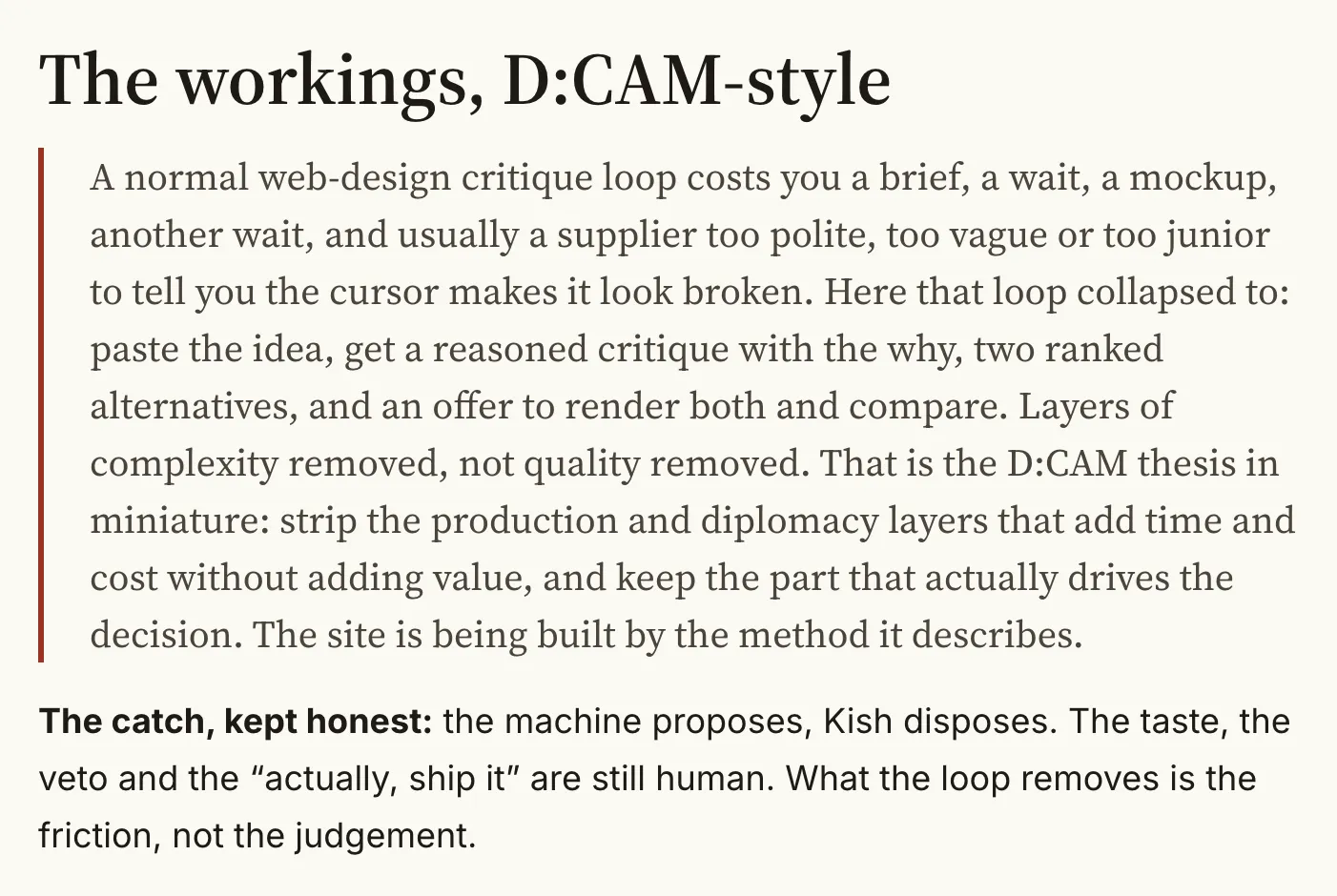
Choose by seeing, not by guessing. Ask for a couple of real alternatives, look at them side by side, keep the best and set the others aside with a note on why they were cut. This site does exactly that, and even has a name for it: Test, Review, Approve the best, Discard the Rest. You can also ask the model for an honest opinion on its own work: a reasoned critique with a couple of ranked options and an offer to render both so you can compare. It proposes; you dispose.
Where can I see it on this site?
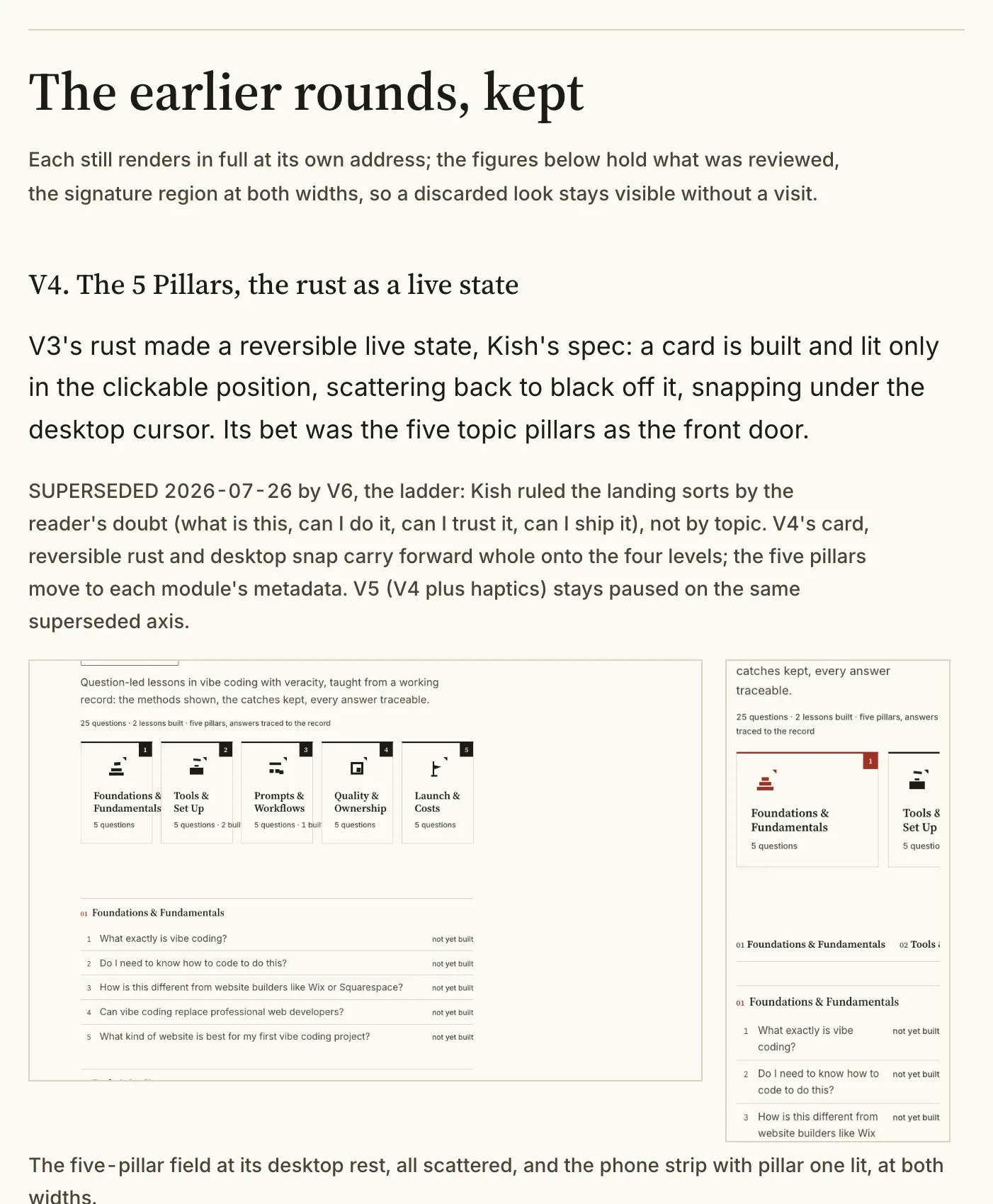
The design bench is a wall of exactly this: each design round kept with the reason it was superseded, so the choosing is on the record, not hidden.
The Second opinion station is a single decision worked in the open, where the model was asked for real candour and gave a reasoned verdict with two ranked alternatives rather than a polite yes.
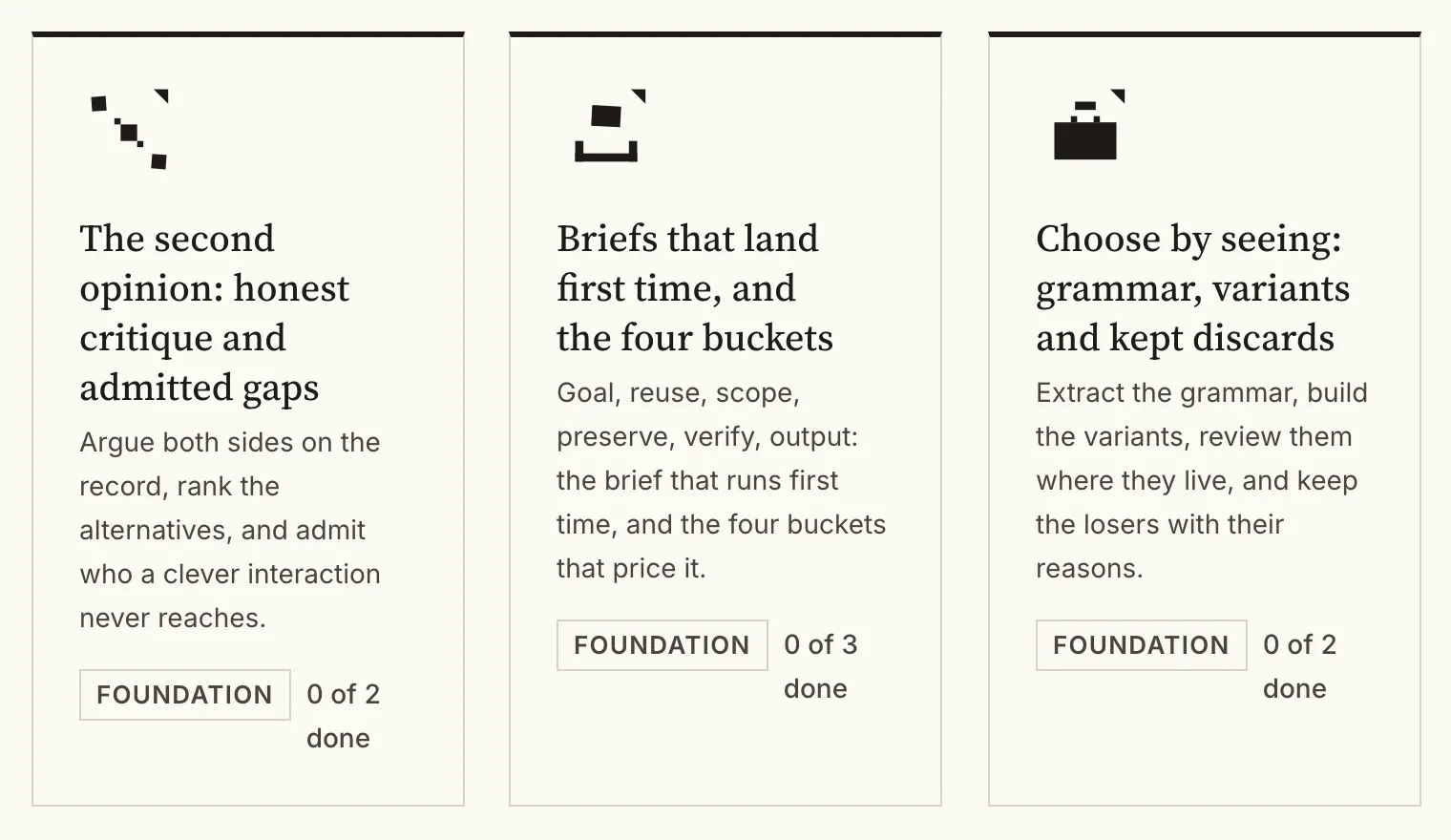
The curriculum names choosing by seeing as one of the bench’s core habits.
So, what if the first version looks wrong?
Treat it as a draft, because that is what it is. Do not start over. Say precisely what is wrong, ask to see a couple of alternatives side by side, keep the best and keep the discards with their reasons. The model will happily critique its own work and rank the options, but the taste, the veto and the “actually, ship it” stay yours. What the loop removes is the friction, not the judgement.
Be mindful of long, meandering conversations, though. The longer a chat gets, the more the model has to re-read the whole thing on every message, and the quality of its answers can start to degrade.
Claude, in particular, shows its thinking as it works, which is a real help when you are learning how a model reacts to your prompts.